

In the challenging yet promising industrial sector of non-ferrous metallurgy, material selection directly impacts production efficiency, product quality, and corporate profitability. Titanium and titanium alloys, with their superior properties, are gradually becoming indispensable key materials in this field, bringing significant changes and improvements to the non-ferrous metallurgical industry.
Corrosion Resistance:
A Powerful Tool Against Corrosive Media In non-ferrous metallurgical and rare metal production processes, equipment is frequently exposed to various corrosive media, placing extremely high demands on its corrosion resistance. Traditional stainless steel materials often fall short in the face of these harsh environments, while titanium and titanium alloys demonstrate significant advantages. Their superior corrosion resistance makes them stand out among numerous corrosive media, becoming an ideal alternative to stainless steel.
Multiple Applications:
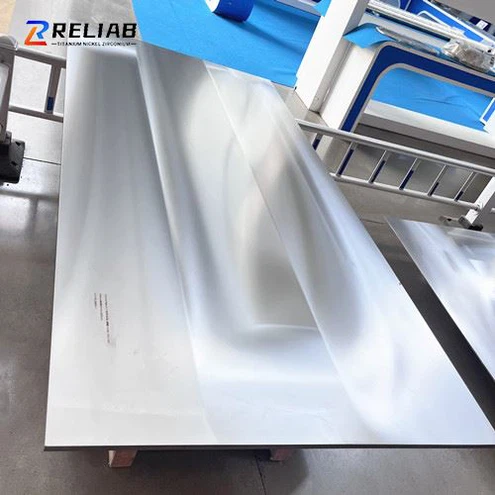
Meeting Diverse Production Needs Titanium's applications in non-ferrous metallurgical production are diverse, allowing for flexible selection based on varying production requirements. Rolled products are one of the most common industrial applications of titanium, meeting the needs of manufacturing large-scale and critical equipment. Through rolling processes, titanium can be processed into plates, pipes, and other materials of various shapes and sizes, providing non-ferrous metallurgical enterprises with a variety of material options. Casting is another important form of titanium application; equipment, pumps, and other components can be manufactured using titanium castings. Furthermore, titanium parts in the form of metal-ceramic components are also used in the non-ferrous metallurgical field due to their high manufacturing efficiency. For example, in magnesium production and smelting, titanium alloys are widely used in a range of equipment, including scrubbing tower reflux sprayers, titanium pumps, titanium piping systems, ventilators, titanium T-joints (titanium tees), titanium throttle valves, titanium reducers, and titanium circulating water tanks. These devices operate in environments with various corrosive media for extended periods; the corrosion resistance of titanium alloys effectively extends the service life of the equipment, ensuring smooth production.
Enhancing Efficiency: The comprehensive support provided to non-ferrous metallurgical enterprises by the application of titanium equipment has brought significant economic and comprehensive benefits. Firstly, titanium equipment increases equipment lifespan and reliability, reducing the frequency of replacement and maintenance, thereby lowering operating and repair costs. Taking titanium rolled products with titanium workpiece shapes as an example, non-ferrous metallurgical enterprises can generate substantial economic benefits annually as a result.
In nickel-cobalt and titanium-magnesium industries, titanium equipment made of titanium alloys is widely used; titanium is also extensively used in copper production; and it is gradually emerging in the production of metals such as zinc, lead, tin, tungsten, molybdenum, mercury, antimony, cadmium, and gold, as well as in aluminum and hard alloys, and in non-ferrous metal processing enterprises. For example, in autoclave equipment, various components in contact with corrosive media are made of titanium. In the new continuous automated solid-liquid extraction (leaching) process for metallic materials, this titanium equipment replaces the original electrolytic cell for preparing metal solutions, ensuring efficient operation. Moreover, the cost of metal in the solution from titanium autoclave equipment is 25% lower than the cost of dissolving metal in an electrolytic cell, further highlighting the enormous potential of titanium equipment in reducing costs and improving efficiency.
Titanium and titanium alloys have a very broad application prospect in the non-ferrous metallurgy field. With the continuous advancement of technology and the increasing demands on material performance, titanium and titanium alloys will undoubtedly play a more important role in the non-ferrous metallurgy industry due to their unique advantages, driving the entire industry towards higher quality and higher efficiency.

Baoji Reliab Metal Materials Co.,Ltd
Mobile: 0086 13092900605
Sales Department 1: WhatsApp +8613092900605 (Mr.Gary)
Sales Department 2: +8613092913521(Ms. Sophia)
Address: No.35 Baoti Rd, Weibin District, Baoji, China


