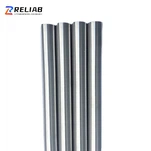
Biocompatible Metals:
A Safety Revolution from Artificial Bones to the Dining Table. When you pick up a pair of pure titanium chopsticks, you are actually holding a piece of "breathing metal." This medical-grade material, used in artificial joints and heart stents, is now quietly revolutionizing our dining safety. A comparative test in a laboratory showed that after immersing 316 stainless steel in an acidic solution for 24 hours, the amount of chromium ions leached reached 0.46 mg/L, while the amount of metal leached from pure titanium tableware remained zero.
Anti-fouling and antibacterial:
The "no-rinse" technology that cleans instantly. In a comparative experiment conducted by the Shenzhen Institute of Microbiology, wooden and titanium chopsticks were simultaneously contaminated with chili oil and left to stand for 8 hours. The results were astonishing: 32,000 CFU/g of bacteria were detected in the crevices of the wooden chopsticks, while only 120 CFU/g remained on the surface of the titanium chopsticks. After rinsing with warm water, the levels dropped even further below the detection threshold. This "self-cleaning" property stems from the oleophobic and hydrophobic surface of titanium, repelling oil stains much like a lotus leaf repels water droplets.
Rust-proof heirloom tableware: Long-lasting safety under medical standards. Outdoor enthusiast Zhang Wei's titanium pot has withstood three years of firewood testing: boiling spring water more than 500 times, and the bottom of the pot remains as bright as new. In contrast, his fellow hiker's 316 stainless steel pot is already covered with scorch marks and pits on the inner wall. This difference stems from titanium's "passivation" properties-the surface oxide film can immediately self-repair after being damaged, unlike stainless steel, which becomes a breakthrough point for corrosion once scratched.
Who needs titanium tableware the most? These 3 types of families should definitely read this:
Families feeding infants: Research from Kumamoto University in Japan confirms that titanium spoons completely block the risk of bisphenol A migration and do not release plasticizers like silicone spoons. Their rapid heat conduction at 45℃ also prevents parents from misjudging food temperatures and scalding their babies.
Allergy sufferers: Clinical data shows that people allergic to nickel and chromium experienced an 89% decrease in oral ulcer incidence after switching to titanium tableware. A lupus patient reported: "I no longer have to worry about heavy metals in tableware increasing the burden on my immune system."
Minimalist lifestyle practitioners: Shanghai housewife Lin Fang replaced her original 32 pieces of ceramic tableware with 4 pieces of titanium tableware (bowl/plate/cup/chopsticks), directly freeing up 60% of kitchen storage space. The temperature resistance range of titanium products from -20℃ to 300℃ allows for seamless transitions from refrigerators to ovens.
Titanium Tableware Buying Guide: 3 Key Factors to Avoid Marketing Traps Composition Test Reports:
Genuine pure titanium should have an oxygen content of <0.18% (medical-grade standard). Some "titanium alloys" on the market are actually cheap products containing 60% aluminum.
Craftsmanship Details: Opt for sandblasted matte surfaces; electroplated colored versions may have coating peeling risks. One-piece stamped spoons are more durable than welded ones.
Usage Scenarios: For home use, 2.5mm thick plates are recommended; for outdoor use, choose 1mm ultralight models. Note that pure titanium conducts heat quickly; for cups, choose double-walled vacuum designs to prevent burns.
As a Swiss environmental organization's assessment states: "For every gram of titanium used, 3 grams of plastic waste are reduced." This material, combining medical safety, eco-friendliness, and timeless aesthetics, is redefining 21st-century dining etiquette.


Baoji Reliab Metal Materials Co.,Ltd
Mobile: 0086 13092900605
Sales Department 1: WhatsApp +8613092900605 (Mr.Gary)
Sales Department 2: +8613092913521(Ms. Sophia)
Address: No.35 Baoti Rd, Weibin District, Baoji, China