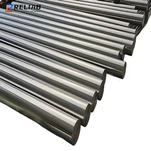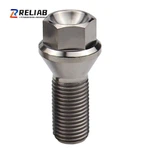
Titanium products are increasingly widely used in fields such as the chemical industry and aerospace. However, with so many different materials, specifications, and manufacturing processes to choose from, how can one make the right choice when purchasing titanium products?
I. Industrial Applications and Key Requirements of Titanium Products
From chemical reactors to aerospace fasteners, the core value of titanium products lies in their unique material properties:
Corrosion Resistance: Withstands strong acids, strong alkalis, and seawater environments
Strength-to-Weight Ratio: Key to weight reduction in the aerospace sector
Biocompatibility: The material of choice for medical implants
The most common trade-off encountered in actual procurement is:
Pure titanium (e.g., pure titanium rods) is cost-effective but lacks sufficient strength
Titanium alloys (e.g., titanium alloy plates) offer superior performance but are difficult to machine
II. Material Properties and Classification of Titanium Products
Differences in the performance of titanium products primarily stem from material composition and manufacturing processes:
Pure Titanium Series (Gr1–Gr3)
Good corrosion resistance but moderate mechanical strength
Suitable for static applications such as chemical process vessel linings
Titanium Alloy Series (Gr5, etc.)
Strength enhanced by the addition of elements such as aluminum and vanadium
The preferred choice for aerospace structural components
Specialty Titanium Materials (e.g., titanium diboride products)
Special applications in extreme environments
Higher cost but superior performance
Common Misconception: Believing that "all titanium products are the same," overlooking grade differences, and selecting an unsuitable material grade to save costs
Conclusion: Material grade directly determines service life; price alone should not be the deciding factor
III. How to Select Titanium Products Based on Application Scenarios
|
Scenario Requirements |
Recommended Solution |
Key Parameters |
| Highly Corrosive Environments | Pure Titanium Sheets/Tubes | Gr1/Gr2 Grades, Alkali-Washed Surface |
| Structural load-bearing components | Gr5 titanium alloy | 6% aluminum + 4% vanadium, hot-rolled |
| High-temperature, high-pressure pipelines | Titanium pipes | Thick-walled seamless pipes, UT inspection compliant |
| Fluid Control | Titanium Valves | Flange Connection, Self-Actuated |
IV. What Additional Considerations Are Needed After Purchasing Titanium Products?
1. Welding Challenges: Conventional welding materials can cause embrittlement of the joint.
Specialized titanium welding wire ensures weld strength.
Inert gas shielding is required.
Machining Limitations: Titanium products require specific cutting parameters.
2. Titanium machining equipment requires adjustment of spindle speed and feed rate.
Avoid using carbon-containing cutting tools.
3. Surface Treatment:
Micro-arc oxidation improves wear resistance.
Nitriding enhances surface hardness.


 Contact: garychen3215@hotmail.com
 Mobile/WhatsApp: +86 13092900605