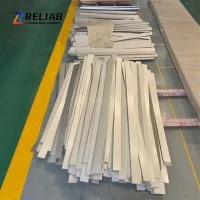
Titanium rods inherently possess advantages such as a high strength-to-weight ratio, excellent corrosion resistance, and good biocompatibility. However, in their raw state, they exhibit certain limitations, including non-uniform surface oxidation, insufficient surface finish, relatively low surface hardness, and suboptimal frictional properties. Through systematic surface treatment, modification, and the application of composite coatings, the microstructure, mechanical properties, chemical stability, and functional attributes of titanium rods can be precisely optimized. This process addresses the material's inherent shortcomings, enabling a refined enhancement of the base material's performance. This article provides a systematic overview of the process principles and key technical characteristics of fundamental surface treatments, functional modifications, composite coatings, and advanced surface engineering technologies for titanium rods.
Surface preparation is a core foundational process for the finishing and modification-strengthening of titanium rods. It is primarily used to remove surface impurities, homogenize the surface structure, and optimize the base finish, thereby providing a clean and stable substrate for subsequent deep-level modification or coating processes. This stage is categorized into mechanical and chemical treatments.
(I) Mechanical Treatment: Mechanical treatment is a physical surface optimization process that employs external forces-such as grinding or impact-to refine the condition of the titanium rod's surface. It leaves no chemical residue and preserves the integrity of the substrate. Mechanical polishing involves progressive refinement using sandpaper of varying grit sizes and specialized polishing wheels; this systematically removes scratches, burrs, and microscopic surface irregularities, potentially achieving a mirror-like finish. This process not only enhances the flatness and density of the titanium surface but also improves surface adhesion, establishing a solid foundation for subsequent operations such as painting, coating, or oxidative modification. Sandblasting utilizes high-speed, high-pressure abrasive particles to rapidly strip away loose oxide layers, rolling impurities, and surface contaminants, while also homogenizing the surface roughness. As a primary pre-treatment method, it effectively eliminates surface defects and improves the uniformity of the titanium rod's structure, making it suitable for substrate cleaning prior to various types of advanced processing.
(II) Chemical Treatment: Chemical treatment achieves surface purification and microscopic leveling through chemical reactions. It offers high efficiency and excellent uniformity, allowing for the precise treatment of microscopic crevices or defects that are difficult to reach via mechanical grinding. Chemical polishing employs specialized weak-acid or alkaline solutions to selectively dissolve microscopic protrusions and irregular grains on the titanium surface, rapidly enhancing overall smoothness and refining the surface's microscopic topography.
Following this, a protective sealing process is required to prevent the newly exposed titanium surface from re-oxidizing, thereby ensuring the stability of the surface structure. Pickling-which utilizes a specialized acid mixture, typically consisting of hydrofluoric acid and nitric acid-efficiently and thoroughly removes high-temperature oxide scale, corrosion products, and various residual contaminants from the titanium rod, effectively restoring the surface to its pristine, base-metal state. This process enables the precise removal of surface impurities without compromising the intrinsic properties of the substrate; it serves as a critical cleaning step prior to heat treatment, electrochemical modification, or the application of composite
coatings on titanium rods.
Building upon foundational cleaning and leveling processes, electrochemical and heat-treatment modification techniques can be employed to reconstruct the surface structure of titanium rods. This fundamentally enhances key mechanical and chemical properties-such as wear resistance, corrosion resistance, and surface hardness-thereby achieving functional reinforcement of the substrate.
(I) Electrochemical Modification: Anodizing, which utilizes a sulfuric acid-based electrolyte, allows for the in-situ growth of a uniform and dense oxide film on the surface of titanium rods through precise, controllable voltage regulation. This stable, highly adherent film significantly improves the surface's corrosion and wear resistance, while also optimizing the material's biocompatibility and enhancing its overall environmental adaptability and operational stability. Micro-arc oxidation (MAO) is an advanced electrochemical strengthening process that employs high-voltage discharges to break down the surface layer of the titanium rod, facilitating the in-situ growth of a ceramic-like oxide layer. This modified layer exhibits exceptional hardness-reaching values above HV1500-and is characterized by a dense, pore-free structure with superior resistance to erosion and corrosion, enabling ultra-high-performance surface reinforcement.
(II) Heat-Treatment Modification: Heat-treatment processes leverage high-temperature elemental diffusion to alter the metallographic structure of the titanium rod's surface, creating a highly stable, hardened layer that delivers a substantial leap in surface mechanical properties. Techniques such as plasma nitriding and laser nitriding can generate dense, hard compound layers-specifically TiN and Ti₂N-on the surface. Following this modification, surface hardness can reach the HV2000 level, and the coefficient of friction is reduced by as much as 60%. This significantly improves wear resistance and galling resistance, effectively addressing the inherent limitations of pure titanium, such as low hardness and susceptibility to wear. Carburizing, meanwhile, drives carbon atoms deep into the surface of the titanium rod at high temperatures, resulting in the formation of a stable, hard TiC (titanium carbide) reinforcement layer. This modified layer exhibits excellent high-temperature resistance and wear resistance; it can withstand long-term exposure to temperatures as high as 800°C without softening or failing, effectively enhancing the structural stability and wear resistance of titanium rods under high-temperature operating conditions.


 E-mail: garychen3215@hotmail.com
 Address: No.35, Baoti Rd, Baoji city, Shaanxi Province, China
 Contact: Mr. Gary Chen
 Phone: +86-917-8883215
 Mobile/WhatsApp: +86 13092900605