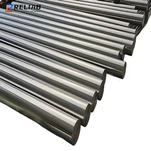
Titanium alloy, as an important structural metal, possesses excellent comprehensive properties such as low density, high specific strength, corrosion resistance, high temperature resistance, non-magnetism, and resistance to seawater and Marine atmosphere corrosion. It is widely used in fields such as aviation, aerospace, ships, weaponry, nuclear, chemical engineering, seawater desalination, medical equipment, and environmental protection.
Heat treatment is an important link in the processing of titanium and titanium alloys to optimize the microstructure and properties. Selecting appropriate heat treatment standards and processes for titanium and titanium alloys is an important condition for titanium and titanium alloy products to achieve the best matching relationship between microstructure and properties that meet their application purposes.

The commonly used heat treatment processes in industry at present are as follows:
Ordinary annealing: Heat the alloy at a temperature of 20 ° C to 250 ° C below its β transformation temperature and then air cool or cool it more slowly.
1) Full annealing: A heat treatment process in which the heat is heated and held at a temperature above the recrystallization temperature but below the β -transformation temperature, followed by air cooling or furnace cooling.
Double annealing: After complete annealing, air cool to a temperature of 250 ° C to 450 ° C below the alloy's β transformation temperature, then heat and air cool.
2) Isothermal annealing: Heat and hold at a temperature of 20 ° C to 160 ° C below the β -transformation temperature of the alloy, then transfer to a furnace at 350 ° C to 450 ° C below the β -transformation temperature, or cool with the furnace to this temperature, hold at this temperature, and then air cool or furnace cool.
3) β annealing: Annealing is carried out at an appropriate temperature above the β transformation temperature of the alloy.
Stress relief annealing: A heat treatment that reduces residual stress in the product without causing recrystallization of the structure.
Solution treatment: A heat treatment in which an alloy is heated to an appropriate temperature and maintained at this temperature for a sufficient period of time to ensure that the soluble components are completely dissolved in the solid solution, and an unstable state can be maintained after quenching.
4) Aging treatment: A heat treatment in which, after solution treatment, the solution is maintained at an appropriate temperature for a sufficient period of time to allow a second phase to precipitate from the unstable solid solution and cause strengthening. It can also cause the intermetallic compounds in the alloy to precipitate to achieve high strengthening.
5) Hot isostatic pressing treatment: In a sealed container, through the simultaneous action of high temperature and high pressure (argon medium), titanium and titanium alloys are subjected to high temperature and isostatic compressive stress in all directions to reduce or remove internal defects such as pores and porosity in titanium and titanium alloys.
Baoji Reliab Metal Materials Co.,Ltd
Tel: +86-917-8883215
Mobile: +8613092900605
+8613092913521
E-mail: garychen3215@hotmail.com