The titanium industry is an integrated industrial chain that spans from titanium ore to finished titanium products. It consists of several key stages: titanium concentrate mining and beneficiation, sponge titanium production, titanium ingot smelting and casting, and titanium product processing.
So, how should we understand the preparation and processing involved in each of these stages? Today, we'll explain them in simple terms:
1. Titanium concentrate mining and beneficiation:
Ore is mined, then crushed and screened to produce titanium concentrate with a specific grade (e.g., 47%). This process involves minimal technical complexity and relies primarily on mineral processing techniques, resulting in low entry barriers. It is a typical raw materials business.
2. Titanium Sponge:
Titanium is extracted from titanium concentrate using physical and chemical methods. The resulting pure titanium has a sponge-like appearance, hence the name "titanium sponge."
According to national standards, titanium sponge grades are classified by purity in ascending order. The highest purity grade is Grade 0A, with a titanium content of 99.8% or higher. followed by Grades 0 through 5. Beyond the standard grades, there is a higher-end "Rotor Grade" sponge titanium, which is further optimized from Grade 0A. Therefore, the technical challenge in sponge titanium production lies primarily in purification capabilities. In China, high-end sponge titanium (Grade 0 and above) accounts for approximately 40–50% of total production capacity. Sponge titanium is a commodity business.
3. Titanium Ingots:
Titanium ingots are produced by melting titanium sponge-sometimes with the addition of alloying elements-at high temperatures under vacuum or in an inert gas atmosphere, and then casting or solidifying the molten metal into a large block. The purpose of this process is to achieve a specific chemical composition and to initially solidify and shape the titanium ingot.
Titanium ingots are typically produced in smelting workshops within specialized smelting plants or titanium material manufacturers, with some companies selling them directly to external customers. The challenge in producing titanium ingots lies in fabricating large-sized ingots with highly uniform chemical composition and extremely low impurity levels, which demands a high level of process precision. Furthermore, because alloy formulations are involved, titanium ingots are highly customizable. Titanium ingots are a raw material business.
4. Titanium Materials:
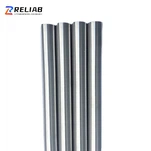
Titanium materials are produced by processing titanium ingots into sheets, bars, tubes, strips, foils, forgings, castings, and other forms. Since titanium alloys can only be forged within a specific temperature range, achieving uniform temperature control throughout the entire process is extremely challenging. Additionally, maintaining a consistent internal crystal structure in the titanium material during forging is also an extremely difficult task.
Consequently, the production of titanium materials represents the most technically challenging stage in the titanium industry. Globally and in China, high-end production capacity accounts for approximately 40% of total titanium material capacity. The titanium materials sector falls under the manufacturing industry.
To put it simply: Titanium concentrate is like growing wheat-some grains are plump with thin husks and high quality, while others are shriveled with thick husks; producing titanium sponge is like grinding wheat into flour-the fewer impurities, the higher the quality; producing titanium ingots is like kneading dough-some add eggs, some add a little oil, and some add a little lye, but the key is to knead the dough until it's uniform and elastic; Producing titanium materials is like making noodles: there are hand-pulled noodles, which come in thick and thin varieties; there are knife-cut noodles, rolled flatbreads, flower buns, and fried dough sticks. Some require deep-frying at high temperatures, some need to be steamed, and others boiled. Every step has strict requirements-this is where the technology truly shines.

 E-mail: garychen3215@hotmail.com
 Address: No.35, Baoti Rd, Baoji city, Shaanxi Province, China
 Contact: Mr. Gary Chen
 Phone: +86-917-8883215
 Mobile/WhatsApp: +86 13092900605