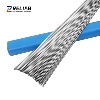
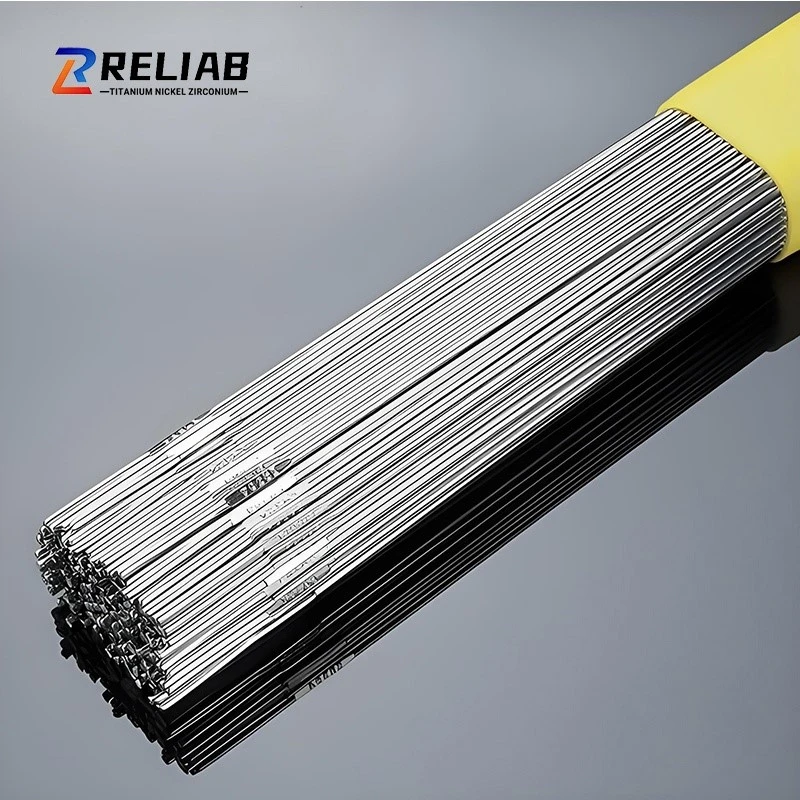
Leveraging the high specific strength, excellent corrosion resistance, good biocompatibility, and high/low-temperature tolerance of titanium alloys, titanium alloy welding wires are widely used in high-end manufacturing sectors that demand rigorous welding reliability and environmental resilience. Key application industries and specific use cases are as follows:
1. Aerospace and Defense
This is the primary sector for titanium alloy welding wire, accounting for approximately 40% of total global demand.
- Civil Aviation: Used for welding and repairing aircraft airframe components-such as frames, spars, stiffeners, engine nacelles, fairings, and landing gear support structures-as well as serving as a critical welding consumable for high-temperature components like aero-engine turbine blades, compressor casings, and hydraulic piping.
- Aerospace and Defense: Utilized in the welding and fabrication of missile airframe structures, satellite modules and support frameworks, fuel tanks, and titanium alloy structural components for military naval vessels.
- Key Advantages: Common grades such as ERTi-5 and ERTi-23 maintain stable mechanical properties across a temperature range of -200°C to 600°C. They offer a 15%–20% weight reduction compared to steel structures while ensuring structural integrity, thereby significantly enhancing fuel efficiency and mission performance.
2. Marine and Offshore Engineering
Leveraging the exceptional resistance of titanium alloys to seawater corrosion, these materials are essential for high-end marine equipment.
- Deep-Sea Equipment: Used in the welding and fabrication of pressure hulls for deep-submergence vehicles, frames for underwater exploration equipment, and desalination systems.
- Offshore Engineering: Employed in the welding of anti-corrosive support structures for offshore drilling platforms and heat exchanger components, as well as in the construction of ship superstructures, masts, seawater transport piping, valves, and pump housings.
- Key Advantages: Titanium alloys can withstand salt spray and seawater erosion over long periods without the need for additional anti-corrosive coatings, substantially extending the service life of marine equipment and reducing operation and maintenance costs.
3. Medical Devices and Biomedicine
Due to their excellent biocompatibility, non-magnetic properties, and ability to withstand high-temperature sterilization, these alloys serve as the primary welding consumables for medical titanium products.
- Implantable Devices: Used for the precision welding of orthopedic hip and knee prostheses, dental implants, bone fixation plates, and nitinol (nickel-titanium) vascular stents. - Surgical Instruments: Welding and processing of various titanium alloy surgical tools and minimally invasive diagnostic and therapeutic instruments.
- Common Grades: ERTi-2, ERTi-4, and medical-grade Ti-6Al-4V ELI (Extra Low Interstitial) welding wires. These produce no harmful precipitates after welding and are safe for direct contact with human tissue.
4. Chemical and Petrochemical Industry
Designed for highly corrosive industrial environments, ensuring the long-term, stable operation of chemical equipment.
- Chemical Equipment: Used in the welding and fabrication of corrosion-resistant reaction vessels, shell-and-tube heat exchangers, acid/alkali storage tanks, material transport pipelines, and flanges-all capable of withstanding harsh, highly corrosive conditions such as strong acids, strong alkalis, and salt spray.
- Oil and Gas Extraction: Used for welding downhole tools, wellhead equipment, and oil/gas gathering and transmission pipelines, providing resistance to corrosive elements like sulfides and chloride ions present in oil and gas media.
5. Automotive and High-End Equipment Manufacturing
Primarily focused on lightweighting and performance enhancement for high-performance vehicles.
- High-Performance Vehicles: Welding of titanium alloy exhaust systems, lightweight chassis components, engine parts, and suspension systems for racing cars and premium passenger vehicles. This reduces overall vehicle weight while maintaining structural integrity, thereby improving power response and fuel efficiency.
- Precision Equipment: Welding of titanium alloy structural components for high-end precision machine tools and automated production equipment.
6. Energy and Power Industry
Tailored for the high-temperature and corrosive conditions found in power systems.
- Nuclear Power: Welding of corrosion-resistant structural components and heat-exchanger piping in nuclear power equipment, meeting stringent safety and reliability standards for the nuclear industry.
- New Energy: Welding of critical load-bearing components for wind power equipment and titanium alloy support structures for photovoltaic systems; also used for the weld repair of high-temperature flue gas duct components in thermal power plants.
7. Other Niche Applications
- Consumer Goods: Welding of high-end sporting equipment, such as titanium alloy bicycle frames and golf clubs; precision welding of titanium alloy eyeglass frames and jewelry. - General Industry: Welding and processing of electroplating racks, titanium springs, and corrosion-resistant industrial fasteners.

 E-mail: garychen3215@hotmail.com
 Address: No.35, Baoti Rd, Baoji city, Shaanxi Province, China
 Contact: Mr. Gary Chen
 Phone: +86-917-8883215
 Mobile/WhatsApp: +86 13092900605