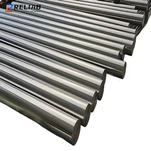
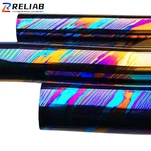
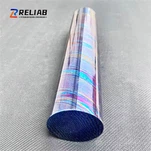
Titanium and its alloys are the most commonly used metal materials for medical implants in orthopedic and dental applications due to their low density, high strength, non-toxicity, and excellent corrosion resistance. Compared to traditional stainless steel and cobalt-based alloys, titanium alloys have a lower modulus of elasticity, which has been shown to reduce stress shielding effects, thereby better inducing and promoting osseointegration. These advantages make them more suitable for clinical medical applications.
However, titanium and its alloys cannot meet the clinical requirements for biomedical implants. Long-term clinical studies have found that titanium implants have poor wear resistance, and the wear debris generated by the friction of titanium implants can cause inflammatory problems and toxic effects on the human body.
To improve the biological and tribological properties of titanium alloys, introducing surface modification techniques to enhance the bioactivity, wear resistance, and antibacterial properties of titanium and titanium alloys is a more economical and effective way to improve existing conventional biomaterials to meet current and evolving clinical needs.
Currently, various physical and chemical methods have been employed to improve the wear resistance of titanium alloy surfaces. One method involves depositing a ceramic coating with excellent wear resistance onto the titanium surface to improve its wear and corrosion resistance. Commonly used wear-resistant coatings include diamond-like carbon (DLC) films and titanium nitride (TiN) coatings.
Diamond-like carbon (DLC) coatings
DLC coatings are commonly used as wear-resistant coatings in medical metal implants due to their high hardness, excellent wear resistance, low coefficient of friction, and good biocompatibility. Some implant devices with surface modification treatment using DLC coatings have already achieved clinical application, showing broad prospects for improving the wear and corrosion resistance of metal components in artificial joints.
Titanium Nitride (TiN)
TiN possesses excellent wear resistance and corrosion resistance, and was initially used in cutting tools to extend their service life. Later, its biocompatibility was discovered, leading to its application in medical implants such as orthopedic devices and dentures. Currently, the main methods for preparing titanium nitride are physical vapor deposition (PVD), chemical vapor deposition (CVD), and thermal spraying.


Baoji Reliab Metal Materials Co.,Ltd
Tel: +86-917-8883215
Sales Department 1: WhatsApp +8613092900605 (Mr.Gary)
Sales Department 2: +8613092913521(Ms. Sophia)
Address: No.35 Baoti Rd, Weibin District, Baoji, China