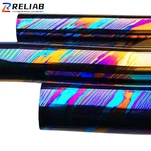
Titanium alloys are alloy metals made of titanium and other metals. Developed in the 1950s, they are structural metals, with high-temperature and structural titanium alloys being particularly prominent in the aerospace field. It wasn't until the 1970s that a number of corrosion-resistant titanium alloys were developed. After the 1980s, corrosion-resistant and high-strength titanium alloys developed further, and titanium alloys began to play a significant role in the aerospace field.
Due to their various properties, titanium alloys have broad application prospects in the field of new materials. Different types of titanium alloys have different properties, including low density, high specific strength, low thermal conductivity, high and low temperature resistance, and corrosion resistance. High strength and corrosion resistance are two of the most important characteristics.
These two outstanding characteristics determine the wide range of uses of titanium alloys on land, sea, air, and in outer space, including aerospace, conventional weapons, ships and marine engineering, nuclear and thermal power generation, chemical and petrochemical industries, metallurgy, construction, transportation, sports equipment, and daily necessities. Spacecraft primarily utilize the high specific strength, corrosion resistance, and low-temperature resistance of titanium alloys to manufacture various pressure vessels, fuel tanks, fasteners, instrument straps, structures, and rocket casings. Artificial earth satellites, lunar modules, manned spacecraft, and space shuttles also use titanium alloy sheet weldments.
The preparation of titanium alloys generally requires three steps of heat treatment, cutting, deoxidation and pickling to produce preliminary titanium alloy products. From smelting to the final product, titanium alloys generally require three steps: sponge titanium preparation, titanium material preparation and titanium material application. The preparation technology of sponge titanium and titanium materials is complex and difficult to prepare. It is a difficult point and key link in titanium manufacturing. To a certain extent, sponge titanium and titanium materials directly determine the quality of titanium alloy products. From the perspective of the entire industry chain, the core barrier of titanium alloys lies not in upstream resources and midstream smelting, but in the processing of titanium materials. The research and development and manufacturing processes of high-end titanium materials are often concentrated in the hands of leading companies.
Currently, high-end titanium processing primarily utilizes vacuum arc melting (VAR). Simply put, VAR involves melting consumable electrodes produced in an induction furnace using a controlled AC arc in a vacuum or inert gas environment. This technology places stringent demands on heat treatment and cutting processes. Currently, only the United States, Russia, Japan, and China possess comprehensive high-end titanium processing technology.


If you are seeking for titanium materials such as titanium plates, bars, tubes, wires and titanium CNC machined parts, BAOJI RELIAB METAL is your one-stop supplier. We supplying the high quality titanium products with fast delivery, and 24-hours sales and after-sales services.
Contact us as below information:
Baoji Reliab Metal Materials Co.,Ltd
Tel: +86-917-8883215
Sales Department 1: +8613092900605 (Mr.Gary)
Sales Department 2: +8613092913521(Ms. Sophia)
Address: No.35 Baoti Rd, Weibin District, Baoji, China