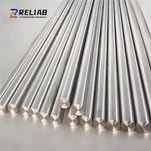
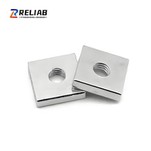
In the motorcycle customization community, titanium screws are highly recommended-and it's not just because they're "expensive" or "good-looking." Their core advantages boil down to three essential benefits: weight reduction, rust resistance, and strength. However, it's important to note that they aren't a one-size-fits-all solution for every part of the bike.
1. Extreme weight reduction, lowering unsprung mass
Titanium alloy has a density of approximately 4.5 g/cm³, which is only about 60% that of steel. Replacing these parts throughout the vehicle can reduce weight by several hundred grams or more. Reducing weight in rotating or suspension components-such as wheels and brake rotors-significantly lowers unsprung mass, resulting in more responsive suspension and more agile handling. For racing or tuning applications focused on achieving a high power-to-weight ratio, this is a critical step toward enhancing performance.
2. Never Rusts-A Blessing for Those with OCD
This is the benefit that ordinary cyclists notice most immediately. The plating on standard steel screws rusts as soon as it wears off, and even stainless steel screws develop rust spots over time. Titanium's natural passivation layer ensures it will never rust-making it particularly suitable for:
Brake calipers and master cylinders: These components are constantly exposed to water and brake dust, creating a highly corrosive environment.
Exterior parts: License plate holders, handlebars, and other components exposed to the elements can stay clean and rust-free for years.
3. Excellent Specific Strength and Unique Properties
Titanium alloys offer tensile strengths comparable to those of medium- to high-strength steels, yet weigh nearly half as much. Another unique advantage is that their coefficient of thermal expansion is similar to that of aluminum alloys. Using titanium alloy screws on aluminum components such as engine blocks can effectively prevent oil leaks or thread damage caused by uneven expansion due to alternating hot and cold temperatures.
The following components do not bear core structural loads; their primary functions are rust prevention, aesthetic appeal, and ease of maintenance. We recommend replacing them with titanium alloy screws:
Engine Cover Plates
Locations: Magneto cover, clutch cover, timing cover, valve cover, etc.
Reason: Original equipment screws are highly prone to rusting due to high temperatures and rain. Replacing them with titanium alloy screws eliminates rust completely and makes disassembly and maintenance much easier, as they are less likely to strip.
Note: A torque wrench must be used to tighten these bolts to the original equipment manufacturer's specifications, and anti-seize compound must be applied.
Body Accessories and Exterior Components
Locations: Front fenders, rear fenders, license plate brackets, headlight brackets, radiator grilles, footrests (non-load-bearing), etc.
Reason: Exposed to the elements year-round, these are prime areas for rust. The screws for these parts are standardized, making them easy to purchase, and they significantly enhance the overall appearance of the vehicle.
Decorative Oil Caps/Dipsticks
Locations: Engine oil filler cap, brake fluid reservoir cap, etc.
Reason: They serve as excellent accents and are rust-resistant and durable.


 E-mail: garychen3215@hotmail.com
 Address: No.35, Baoti Rd, Baoji city, Shaanxi Province, China
 Contact: Mr. Gary Chen
 Phone: +86-917-8883215
 Mobile/WhatsApp: +86 13092900605