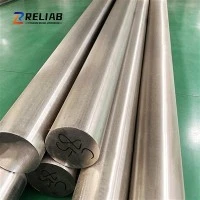
what is Titanium Rod ASTM F67?
Titanium Rod ASTM F67 are solid cylindrical titanium bars made from titanium sponge (a purified raw material derived from titanium ore) through vacuum melting, forging, rolling, and precision grinding.
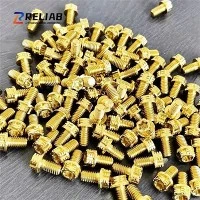
Titanium rods serve as the raw material at the very source of the entire titanium industry chain-titanium screws, titanium forgings, titanium shafts, medical implants, aerospace components, and chemical piping fittings. All raw blanks for titanium products are machined from titanium rods.
Major Grades
1. Industrial-Grade Pure Titanium Rods (ASTM Gr1/Gr2/Gr3, ASTM B348)
Gr1: Purity >99.5%. The softest of all titanium grades, with unmatched toughness and corrosion resistance, and zero risk of rejection by the human body. It can be bent freely without cracking and is resistant to strong acids and seawater. Its main drawback is relatively low strength.
Applications: Medical implants, titanium tableware, precision chemical engineering, deep-sea environments with weak acids
Gr2: The industry's all-round champion! The top choice for 90% of civilian and export applications. Offers a perfect balance of strength, corrosion resistance, and machinability, providing the best value for money and the highest global shipment volume.
Applications: Chemical pumps and valves, seawater desalination, titanium flanges, new energy components, standard fasteners
Gr3: The highest strength among pure titanium alloys, but with reduced ductility; used only in high-pressure, general corrosion-resistant applications
2. Titanium Alloy Bar (Gr5 Ti6Al4V, the Ace of Aviation)
An alloy of titanium, aluminum, and vanadium, offering over three times the strength of Gr2 while maintaining a density of only half that of steel-lightweight yet robust.
Disadvantages: Difficult to bend, not resistant to strong acids and alkalis, and 15%–25% more expensive than pure titanium.
Applications: Aircraft structural components, drones, golf clubs, automotive lightweighting, high-strength mechanical shafts
High-end Special Grades
Gr12 (Ti-0.3Mo-0.8Ni): Resistant to strong reducing acids and wet chlorine environments; suitable for specialized chemical processing applications
ELI Low-Oxygen Medical Titanium: Strictly controlled oxygen content; specifically for orthopedic bone pins and joint implants; non-reactive with the human body
BT22 (Ti-5Al-4.75Mo-4.75V-1Cr-1Fe): High-temperature, high-strength titanium alloy for aerospace applications; specifically for military and aerospace use
How are titanium rods "produced"?
Step 1: Melting and Casting (From Titanium Sponge to Ingots)
Titanium sponge (a porous form of titanium resembling popcorn) is combined with alloying elements (such as aluminum, vanadium, and molybdenum) and repeatedly melted at least three times using a vacuum arc remelting (VAR) furnace.
Step 2: Billet Forging (Reducing the Diameter of the Large Bar)
Cast ingots typically have a diameter of 300–600 mm. To reduce their diameter and elongate them, they are repeatedly forged using a high-tonnage hydraulic press. Titanium has poor thermal conductivity (only one-fifth that of steel), so during forging, the surface cools quickly while the core remains hot; this temperature disparity makes the material prone to cracking.
Key Control Points:
The forging temperature must be maintained 50–100°C below the β phase transformation point (approximately 950°C for Gr5).
The forging ratio (degree of deformation) must be sufficient to "break down" the coarse as-cast microstructure.
Step 3: Rolling/Extrusion (Finishing to Target Dimensions)
Hot rolling: Coarse bars (Φ20 mm and above) are typically hot-rolled for high efficiency.
Hot extrusion: Suitable for producing small-diameter, high-precision bars, such as small bars used in aerospace fasteners.
Cold drawing: When extremely high surface quality and dimensional accuracy are required-such as for bars used in medical implants-multiple cycles of cold drawing and annealing are necessary.
Step 4: Heat Treatment (Tuning the "Character" of the Titanium Rod)
Heat treatment is the key to the performance of titanium rods; even with the same chemical composition, different heat treatments can result in vastly different properties.
Step 5: Surface Treatment and Finishing
Pickling: Removes oxide scale using a mixed acid solution of HF and HNO₃ to reveal the silver-white natural color of titanium
Sandblasting/Shot Blasting: Cleans the surface and introduces compressive stress to improve fatigue life
Mechanical Polishing/Electrolytic Polishing: Medical rods must achieve a mirror finish with Ra ≤ 0.4 μm
Anodizing: Applies decorative colors (titanium gray, titanium blue, titanium gold) to watch cases and consumer electronics
Key Advantages
- Ultra-lightweight: With a density of 4.51, it is only half that of stainless steel and 40% lighter than steel while maintaining the same load-bearing strength-a must-have for the aerospace and new energy industries.
- Permanent corrosion resistance: It does not rust even after long-term immersion in seawater, hydrochloric acid, aqua regia, or chemical acids and alkalis. While stainless steel corrodes and becomes unusable after decades, titanium lasts a lifetime.
- Biocompatible and Non-Toxic: Recognized as a biocompatible metal; causes no inflammation or rejection in bone implants; non-magnetic in MRI scans; specifically designed for medical devices.
- Stable at Extreme Temperatures: Does not fracture at -200°C and does not deform at 500°C; fully suitable for deep-sea and aerospace applications.
- Exceptional Fatigue Resistance: Withstands repeated vibration and bending without breaking; the service life of shafts and fasteners far exceeds that of ordinary metals.
Specifications and Dimensions
Diameter: Ultra-fine φ1mm → Oversized forged bars φ800mm; standard market sizes φ6–φ200mm
Length: Standard lengths per national standards: 1m, 2m, 3m; custom lengths available for export orders
Surface Types
Black-skin bars: Retain original forged scale; lowest price; used for blank cutting
Machined Bars: Precision-turned and smooth, the mainstream choice for machining
Mirror-Polished Bars: Bright and precise, for medical and high-end precision parts in export markets
Pickled Bars: No oxide layer, ultimate corrosion resistance, for chemical and deep-sea applications
Standards: Domestic GB/T, Export Standards: US ASTM B348, Japanese JIS
Targeted Application Across All Industries
- Chemical & Petrochemical: Gr1/Gr2-reactors, pump shafts, heat exchangers; unmatched resistance to chloride ion corrosion
- Medical & Orthopedics: Gr1-ELI (low oxygen)-bone screws, plates, dental implants, artificial joints
- Aerospace: Gr5/BT22, aircraft landing gear, engine components, military structural parts
- Marine & Shipbuilding: Gr2, deep-sea equipment, desalination systems, marine fasteners-lifetime corrosion resistance in seawater
- Hydrogen & New Energy: Gr2, fuel cell components-resistance to hydrogen embrittlement without fracturing
- Sports & Outdoor: Gr5, golf clubs, titanium bicycles, high-end mountaineering gear
Products showcase


Stocks sizes at Present
We have the stocks for most of the normal sizes/specs for different grades of titanium and titanium alloy, and can make to order for special sizes.
Stock grades: Gr1, Gr2, Gr5(TI-6AL-4V), Gr7(Ti-0.2Pd), Gr9(Ti-3Al-2.5v), Gr23(Ti-6Al-4V Eli)
Standard: ASTM B348, ASTM F67, ASTM F136, AMS 4928
Shape: Round, Square, Rectangle
Size of stocks: Φ 1mm,Φ 1.2mm,Φ 2mm, Φ2.5mm, Φ 3mm, Φ3.5mm, Φ 4mm, Φ4.5mm, Φ5mm, Φ5.5mm, Φ6mm, Φ6.5mm, Φ7mm, Φ8mm, Φ8.5mm, Φ9mm, Φ9.5mm, Φ10mm, Φ11mm, Φ12mm, Φ13mm, Φ14mm, Φ15mm, Φ16mm, Φ18mm, Φ20mm, Φ21mm, Φ22mm, Φ25mm, Φ28mm, Φ30mm, Φ35mm, Φ36mm, Φ38mm, Φ40mm, Φ45mm, Φ50mm, Φ55mm, Φ60mm, Φ70mmΦ 75mm,, Φ80mm,Φ 85mm,Φ90mm,Φ 100mm...

Shipping solutions

1. By international express: DHL, UPS, FEDEX, TNT, SF, Postal express.(around 4~5 days)
2. By air cargo (around 5~7 days)
3. By sea/ocean (around 12~25 days)
4. By railway train(around 20-40 days)
how to contact us
 E-mail: garychen3215@hotmail.com
 Address: No.35, Baoti Rd, Baoji city, Shaanxi Province, China
 Contact: Mr. Gary Chen
 Phone: +86-917-8883215
 Mobile/WhatsApp: +86 13092900605
Hot Tags: titanium rod astm f67, China titanium rod astm f67 manufacturers, suppliers, factory, titanium rod welding, titanium bar, titanium barstock, titanium round bar, titanium for sale, titanium flat bar