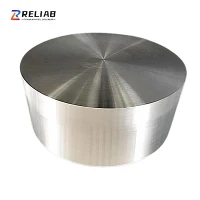
Hey there! As a supplier of TI6AL4V Titanium Alloy Plates, I've got a ton of experience and knowledge about these amazing materials. Today, I'm gonna dive into a super important topic: What is the hardness variation across TI6AL4V Titanium Alloy Plates?
TI6AL4V, also known as Grade 5 titanium alloy, is one of the most widely used titanium alloys out there. It's got a great combination of strength, corrosion resistance, and low density, which makes it perfect for a whole bunch of applications, from aerospace to medical devices. But one thing that can really affect its performance is the hardness variation across the plates.
So, what causes this hardness variation? Well, there are a few factors at play. First off, the manufacturing process can have a big impact. When we're making these plates, we use a variety of techniques like forging, rolling, and heat treatment. Each of these steps can introduce differences in the microstructure of the alloy, which in turn affects its hardness.
For example, during the forging process, the alloy is heated and then shaped under high pressure. This can cause the grains in the alloy to deform and align in a certain direction. If the forging is done unevenly, it can lead to areas of different hardness across the plate. Similarly, the rolling process can also affect the hardness. The amount of reduction in thickness during rolling can change the grain size and orientation, which can result in hardness variations.
Heat treatment is another crucial factor. When we heat treat the TI6AL4V plates, we're basically trying to control the precipitation of certain phases in the alloy. This can have a significant impact on the hardness. If the heat treatment is not done correctly, it can lead to inconsistent hardness across the plate. For instance, if the plate is not heated evenly or if the cooling rate is too fast or too slow in some areas, it can cause differences in the hardness.
Another thing that can affect the hardness variation is the chemical composition of the alloy. Even small variations in the amounts of aluminum, vanadium, and other elements can change the hardness. For example, if there's a slightly higher amount of aluminum in one part of the plate, it can make that area harder.
Now, let's talk about why this hardness variation matters. In applications where the TI6AL4V plates are used, consistent hardness is often crucial. In the aerospace industry, for example, these plates are used in components like aircraft frames and engine parts. If there are significant hardness variations, it can lead to uneven stress distribution. This can cause premature failure of the component, which is obviously a big no - no when it comes to safety.
In the medical field, TI6AL4V plates are used in things like bone implants. The hardness of the plate needs to be consistent to ensure proper integration with the bone and to avoid any issues like stress shielding. If the hardness varies too much, it can cause problems with the long - term performance of the implant.
So, how do we deal with this hardness variation? At our company, we've got a strict quality control process in place. We start by carefully selecting the raw materials to make sure the chemical composition is as consistent as possible. During the manufacturing process, we use advanced monitoring techniques to ensure that each step is carried out precisely. For example, we use thermocouples to monitor the temperature during heat treatment and strain gauges to measure the deformation during forging and rolling.
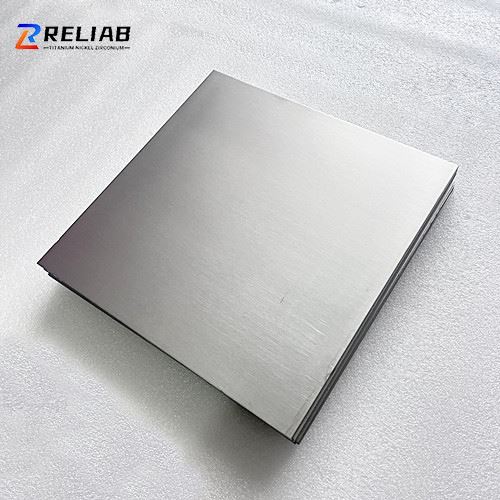

After the plates are manufactured, we perform thorough hardness testing. We use techniques like the Rockwell hardness test and the Brinell hardness test to measure the hardness at multiple points across the plate. If we find any areas with significant hardness variations, we can take corrective actions. Sometimes, we might re - heat treat the plate to try and even out the hardness.
Now, if you're in the market for high - quality TI6AL4V Titanium Alloy Plates, we've got you covered. We offer a wide range of products, including GR5 Titanium Alloy Plate Strip, BT6 Titanium Wrought Alloy Plate, and AMS 4907 Titanium Alloy Sheet. Our plates are made with the highest quality standards, and we make sure to minimize the hardness variation as much as possible.
If you're interested in our products or have any questions about the hardness variation or anything else related to TI6AL4V Titanium Alloy Plates, don't hesitate to reach out. We're always happy to have a chat and discuss your specific needs. Whether you're a small - scale manufacturer or a large - scale industrial company, we can provide you with the right solutions.
In conclusion, understanding the hardness variation across TI6AL4V Titanium Alloy Plates is crucial for ensuring the quality and performance of these materials. By being aware of the factors that cause the variation and taking appropriate measures to control it, we can provide our customers with top - notch products that meet their requirements. So, if you're looking for reliable TI6AL4V Titanium Alloy Plates, give us a chance, and we'll show you what we can do.
References
- "Titanium Alloys: Fundamentals and Applications" by J. C. Williams and E. W. Collings
- "Materials Science and Engineering: An Introduction" by William D. Callister, Jr. and David G. Rethwisch