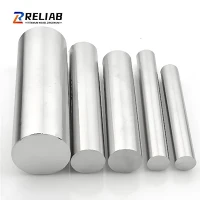
Shear strength is a critical mechanical property that measures a material's ability to resist forces that cause its internal layers to slide past one another. When it comes to titanium bars, understanding their shear strength is essential for various applications, from aerospace engineering to sports equipment manufacturing. As a trusted titanium bar supplier, I'm here to delve into the intricacies of the shear strength of titanium bars, exploring its influencing factors, testing methods, and real - world implications.
Understanding Shear Strength
Shear strength is defined as the maximum shear stress that a material can withstand before failure. In the context of a titanium bar, shear stress occurs when two parallel forces act in opposite directions on different parts of the bar, causing it to deform in a shearing motion. This is different from tensile strength, which measures a material's resistance to being pulled apart, and compressive strength, which measures its resistance to being squeezed.
The shear strength of a titanium bar is influenced by several factors, including the alloy composition, heat treatment, and the manufacturing process. Different titanium alloys have different atomic structures and chemical compositions, which directly affect their mechanical properties. For example, Grade 5 titanium, also known as Ti - 6Al - 4V, is one of the most widely used titanium alloys due to its excellent combination of strength, corrosion resistance, and weldability. Its shear strength is relatively high compared to some other grades, making it suitable for high - stress applications such as aircraft components.
Heat treatment is another crucial factor. By subjecting the titanium bar to specific heating and cooling cycles, the internal microstructure of the metal can be altered, which in turn affects its shear strength. Annealing, for instance, is a heat - treatment process that can relieve internal stresses and improve the ductility of the titanium bar, which may also have an impact on its shear strength.
The manufacturing process also plays a significant role. Bars produced through precision forging or extrusion may have a more uniform grain structure, leading to better mechanical properties, including shear strength, compared to bars made by other methods.
Shear Strength of Different Titanium Bar Products
As a titanium bar supplier, we offer a wide range of products, each with its own unique shear strength characteristics.
The Grade 9 Titanium Scooter Bar is a popular choice for the scooter industry. Grade 9 titanium, or Ti - 3Al - 2.5V, is known for its good combination of strength and formability. The shear strength of this bar is sufficient to withstand the dynamic loads and stresses experienced during scooter use, such as the forces exerted when turning or braking. Its relatively low density also makes the scooter lighter, improving its overall performance.
Our ASTM B348 Titanium Round Bar is manufactured in accordance with the ASTM B348 standard, which specifies the requirements for wrought titanium and titanium - alloy bars and billets. This bar is available in various grades, each with different shear strength values. The ASTM standard ensures that the bars meet certain quality and performance criteria, including a minimum shear strength for specific applications. For example, in the medical industry, where precision and reliability are of utmost importance, the shear strength of these bars must be carefully controlled to ensure the safety and effectiveness of medical devices.
The Ti - 3AI - 2.5V Alloy Rod and Bar offers a good balance between strength and weight. The alloy's unique composition gives it a relatively high shear strength, making it suitable for applications where lightweight materials with high strength are required, such as in the automotive and aerospace industries. In aerospace, these bars can be used in the construction of aircraft frames and engine components, where they need to withstand high - stress conditions.
Testing the Shear Strength of Titanium Bars
To accurately determine the shear strength of titanium bars, various testing methods are employed. One of the most common methods is the single - shear test. In this test, a specimen of the titanium bar is placed in a testing machine, and a load is applied perpendicular to the axis of the bar until it fails in shear. The shear strength is then calculated by dividing the maximum load by the cross - sectional area of the sheared surface.
Another method is the double - shear test, which is more suitable for larger specimens or when a more accurate measurement is required. In a double - shear test, the specimen is subjected to two opposing shear forces simultaneously, and the shear strength is determined in a similar way as in the single - shear test.
Non - destructive testing methods can also be used to assess the quality and integrity of the titanium bar, which indirectly provides information about its shear strength. Ultrasonic testing, for example, can detect internal defects such as cracks or inclusions, which may significantly reduce the shear strength of the bar.
Real - World Applications and the Importance of Shear Strength
The shear strength of titanium bars is crucial in many real - world applications. In the aerospace industry, titanium bars are used in the construction of aircraft wings, landing gear, and engine components. These parts are subjected to high - stress conditions during flight, including shear forces caused by air pressure, vibrations, and maneuvering. A titanium bar with insufficient shear strength could lead to catastrophic failure, endangering the lives of passengers and crew.
In the automotive industry, titanium bars are used in high - performance engines, suspension systems, and exhaust components. The ability of these bars to withstand shear forces is essential for the reliable operation of the vehicle, especially in high - speed or high - load situations.
In the sports equipment industry, such as in the manufacture of bicycles and golf clubs, titanium bars are used for their lightweight and high - strength properties. The shear strength of these bars ensures that the equipment can withstand the forces exerted during use, providing a better user experience and longer product lifespan.
Conclusion
As a titanium bar supplier, we understand the importance of shear strength in various applications. Our products, such as the Grade 9 Titanium Scooter Bar, ASTM B348 Titanium Round Bar, and Ti - 3AI - 2.5V Alloy Rod and Bar, are carefully manufactured and tested to meet the highest quality standards.


If you are in need of titanium bars for your specific application, we invite you to contact us for procurement and negotiation. We have a team of experts who can provide you with detailed information about our products, including their shear strength and other mechanical properties, to help you make the best choice for your project.
References
- Callister, W. D., & Rethwisch, D. G. (2017). Materials Science and Engineering: An Introduction. Wiley.
- ASM Handbook Committee. (2000). ASM Handbook, Volume 2: Properties and Selection: Nonferrous Alloys and Special - Purpose Materials. ASM International.
- ASTM International. (2021). ASTM B348: Standard Specification for Wrought Titanium and Titanium - Alloy Bars and Billets.