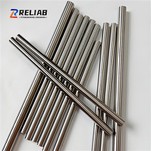
Titanium materials intended for human implantation must be of medical-grade quality, strictly adhering to relevant ASTM and ISO standards for medical materials. These standards impose rigorous requirements regarding impurity content, mechanical properties, and biocompatibility. Standard industrial-grade titanium (such as Grade 2 or Grade 5 titanium per the ASTM B348 standard) is strictly prohibited for use in human implants; such materials fail to meet the necessary criteria for the control of interstitial elements and impurities, as well as biocompatibility, posing serious medical risks.
The following list outlines the titanium grades commonly used in clinical implants worldwide, along with their corresponding standards and primary applications. All of these are compliant medical-grade materials recognized by the FDA and CE.
1. Commercially Pure Titanium (CP-Ti) for Medical Use
Standards: ASTM F67 / ISO 5832-2
Classified into four grades based on interstitial element content; Grades 1, 2, and 4 are the most frequently used for medical implants. Key advantages include superior biocompatibility, excellent osseointegration, exceptional resistance to corrosion by bodily fluids, and outstanding formability.
2. Classic α+β Type Medical Titanium Alloys
Currently the mainstream material for load-bearing orthopedic implants, these alloys offer the best overall balance of strength, fatigue resistance, and processability, serving as the "gold standard" category among medical titanium alloys.
(1) Ti-6Al-4V ELI (Grade 23)
Standards: ASTM F136 / ISO 5832-3
- Key Characteristics: "ELI" stands for "Extra Low Interstitial" (with strict limits on oxygen, iron, and nitrogen content). Compared to industrial-grade Ti-6Al-4V (Grade 5), it offers significantly improved toughness, fatigue strength, and long-term safety for implants. It possesses excellent overall mechanical properties and has been thoroughly validated through over 50 years of clinical use.
- Primary Implant Applications:
- Orthopedics: Artificial hip stems, knee joint components, spinal internal fixation systems (pedicle screws, connecting rods, interbody fusion cages), load-bearing orthopedic trauma plates, and intramedullary nails.
- Dentistry: High-load dental implants and prosthetic components.
- Others: Sports medicine anchors, heart valve stents, and orthopedic surgical instruments.
(2) Ti-6Al-7Nb
Standards: ASTM F1295 / ISO 5832-11
- Key Characteristics: A vanadium-free alloy designed to eliminate the potential cytotoxic risks associated with vanadium, resulting in superior biocompatibility. Its mechanical properties are comparable to those of Ti-6Al-4V ELI, and it enjoys a higher level of acceptance in the European market.
- Primary Implant Applications: Hip stems, spinal internal fixation devices, dental implants, and other long-term implants that require a higher degree of biocompatibility.
3. Low-Modulus β-Type Medical Titanium Alloys
A new generation of titanium materials for implants, specifically developed to address the "stress shielding" effect common with traditional titanium alloys; this represents the future direction for orthopedic implant technology. - Key advantage: An elastic modulus of approximately 70–80 GPa-significantly lower than that of Ti-6Al-4V (~110 GPa) and closer to that of human cortical bone (10–30 GPa)-which helps substantially reduce postoperative bone resorption and extend the service life of the implant, making it particularly suitable for younger patients.
4. Nickel-Titanium Shape Memory Alloy (Nitinol)
Standard: ASTM F2063
- Key Characteristics: Exhibits unique shape memory effects and superelasticity, along with excellent fatigue resistance. For medical-grade applications, nickel release is strictly controlled to meet biocompatibility requirements for long-term implantation.
- Primary Implant Applications: Coronary/peripheral vascular stents, atrial septal defect (ASD) occluders, orthodontic archwires, shape memory bone fixation devices (e.g., patellar claws, clavicular hooks), gastrointestinal/biliary stents, and surgical hemostatic clips and staples.
Summary:
The logic for material selection can be broadly categorized into three tiers:
High-load, long-term applications (joint prostheses, intramedullary nails, spinal implants) → Grade 23 (Ti-6Al-4V ELI) is the industry-standard choice.
1. Low-load applications, or those involving contact with bone or soft tissue (dental, craniofacial, or external casing components) → Grade 1/2
2. Commercially pure titanium, favored for its high ductility and ease of processing.
3. High-end implants requiring the avoidance of vanadium or a lower elastic modulus → Vanadium-free alloys (e.g., Ti-6Al-7Nb, Ti-13Nb-13Zr, Ti-15Mo).


 E-mail: garychen3215@hotmail.com
 Address: No.35, Baoti Rd, Baoji city, Shaanxi Province, China
 Contact: Mr. Gary Chen
 Phone: +86-917-8883215
 Mobile/WhatsApp: +86 13092900605